A ‘Rosetta Stone’ for the Curious.
“Liber Circuitdelicus”
Circuitdelic Laboratory is part backyard science lab, part modern mythology, and part psychological detective story. Start with this visual “Rosetta Stone” and follow the trail through cymatics, quantum consciousness, and the human story behind the art.
Examine > Research > Contemplate > Peace
🔍 📚 🤔 ☮️ 🙏
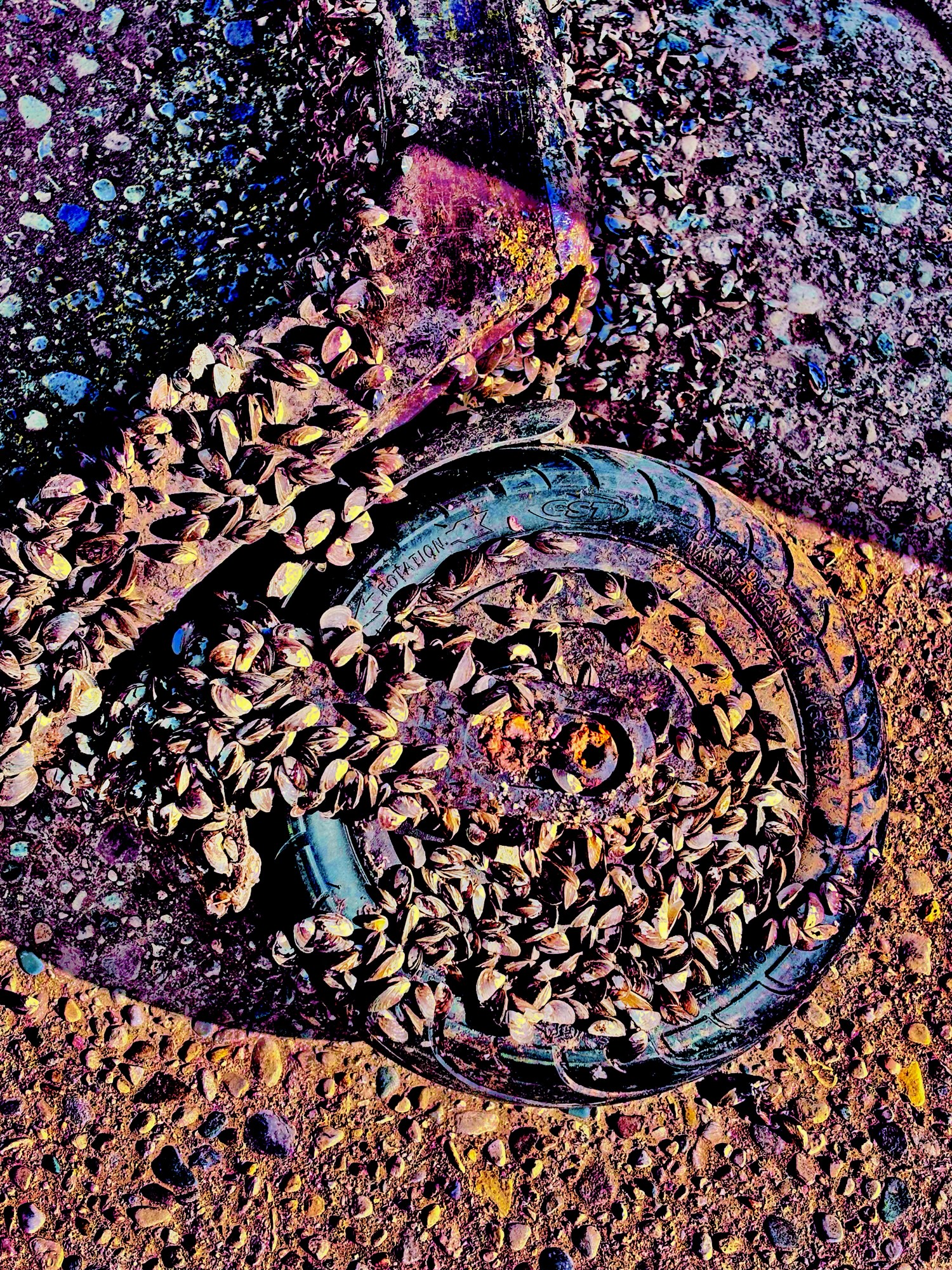
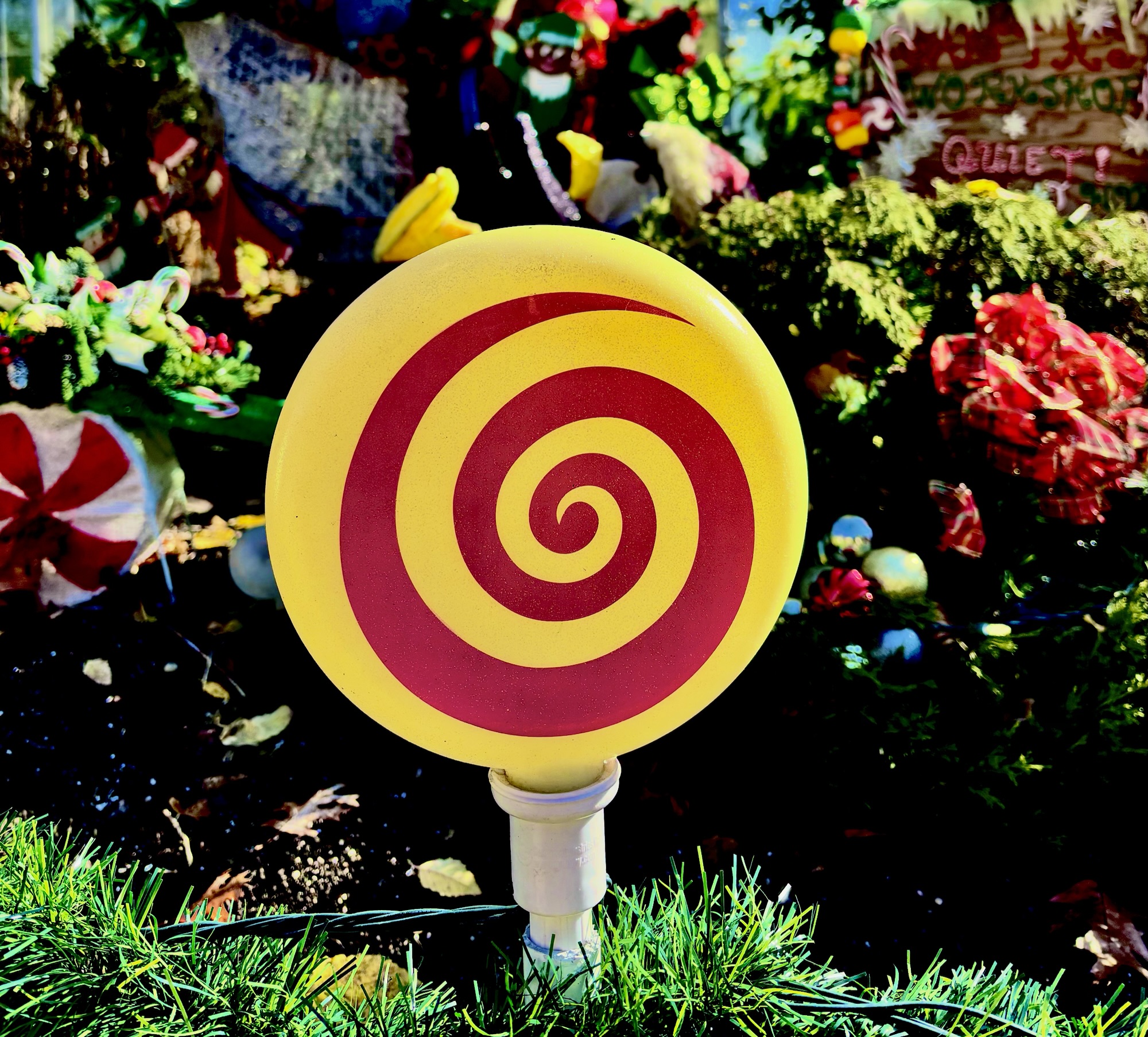
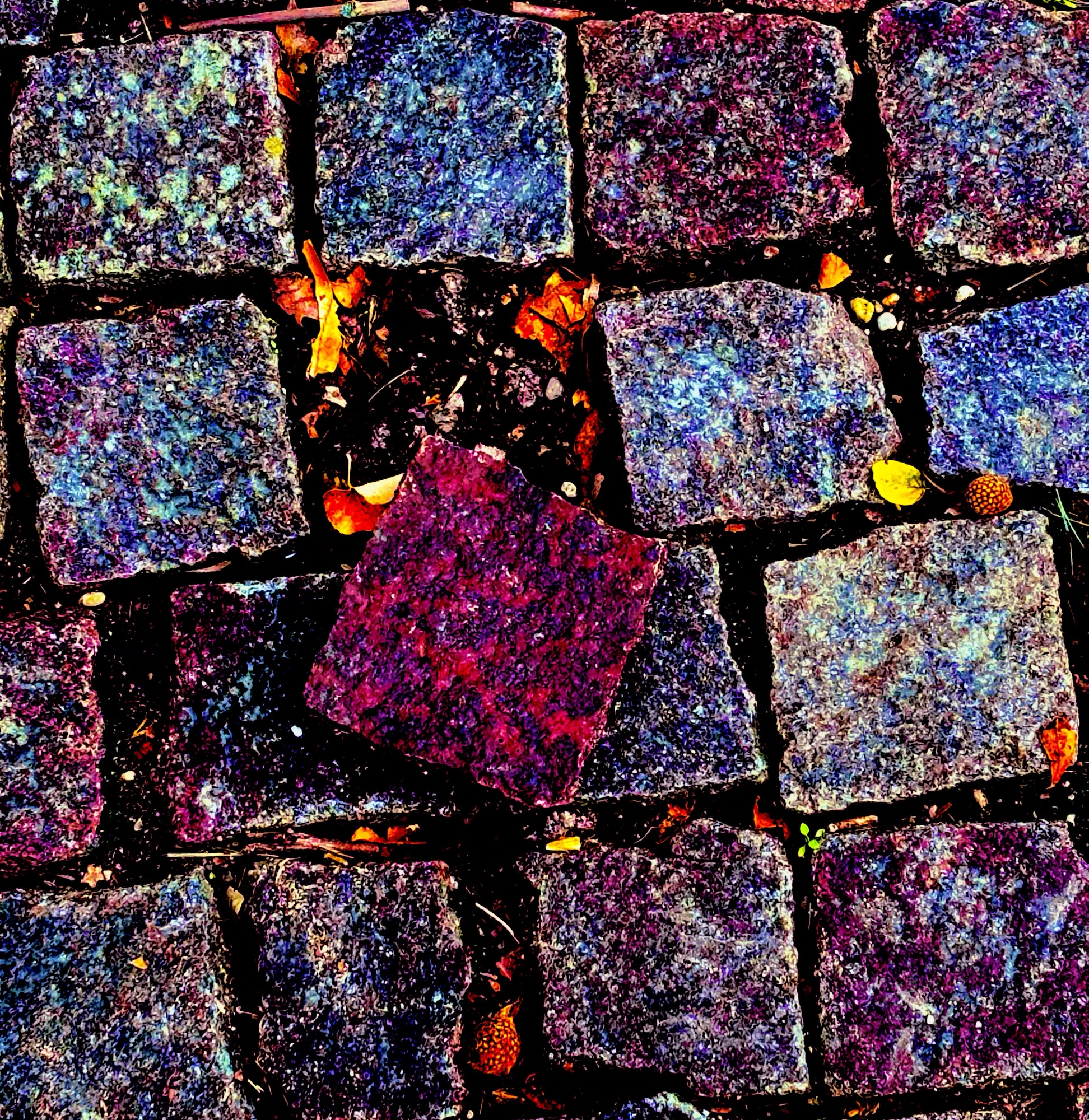
Hint: Images and their text/alt-text are best understood as pairs or in groups.


As Within, So Without.
As the Universe, So the Soul.”
“Mirror Lake – New Eden”


by Circuitdelic Sound System
“…The record of the passing of the universe through the soul of a man.”
– Cary Baynes – discussing Carl Jung’s Red Book.
Teacher’s/Critic’s Edition:
Psycho-Geography of the Circuit: Jon-Paul Kroger’s Hermetic Atlas
In the digital wilds of personal publishing, where the blog format is most frequently relegated to the ephemeral churn of lifestyle curation or diary-keeping, the Cincinnati-based artist and researcher Jon-Paul Kroger has quietly constructed something far more ambitious: an ongoing, hyper-associative Wunderkammer. Operating under the moniker Circuitdelic Laboratory, Kroger treats the web page not merely as a portfolio, but as an exhibition space for a sprawling conceptual project that blurs the boundaries between outsider assemblage, experimental photography, spirituality , philosophy, amateur physics, personal/ancestral history, time, and space.
Nowhere is this methodology more crystallized than in Circuitdelic Cipher (2026), a dense, vertical scroll of paired images that the artist explicitly frames as a “‘Rosetta Stone’ for the Curious.” Prefaced by a deceptively simple instruction—“Images are best understood as pairs or in groups”—and anchored by the classical Hermetic axiom “As Above, So Below,” the work unfolds as a visual call-and-response. In its grid-like accumulation of rhyming forms, Cipher inevitably recalls Aby Warburg’s unfinished Mnemosyne Atlas, substituting Warburg’s art-historical pathos formulas with a syncretic cosmology of electromagnetism, sacred geometry, and Midwestern psychogeography.
At the heart of Kroger’s practice is a radical flattening of hierarchy between the monumental and the mundane. In the opening sequences of the Cipher, a hand, almost as if by invitation, points upwards, with the one word title, Maradona. The stone towers of Cincinnati’s nineteenth-century John A. Roebling Suspension Bridge are aligned with the setting sun. The dialogue continues into Kroger’s own room, where once again, the setting sun (the Sun aka ‘Surya’ is an emotionally powerful and recurring theme), perfectly aligned strikes west facing windows, enters the artist’s east facing room and illuminates its symbolic counterpart on a doorway curtain as though it were a LightBox at the ancient structure, NewGrange in Ireland or a scene from Raiders of the Lost Ark. Through careful framing and saturated, almost psychedelic color manipulation, Kroger elevates Rust Belt civil engineering and his own interior space to the status of an ancient astronomical temple echoing with mythical archetypes.
Elsewhere, a dragonfly—an Archetype of metamorphosis—is juxtaposed against a repurposed Circuitdelic t-shirt bearing the logo of Kroger (the supermarket giant headquartered in the artist’s hometown) and the silhouetted figure of Pinocchio, again reaching upward, celebrates art and life, stretching toward the sun. In an homage to Nietzsche’s Also Sprach Zarathustra, the corporate ephemera of everyday urban life gets absorbed into the same mythic current as classical philosophy, when a corporate officer, shades of ‘Falling Down’, sheds his ego and transforms into an Übermensch, a savior Archetype expressed as a member of The Mandelbrot family of cycle breaking superheroes created by Kroger in 2025. Art as savior.
This refusal to compartmentalize extends to the artist’s treatment of hard science and esoteric mysticism. Rather than positioning physics and spirituality as oppositional forces, Kroger uses side-by-side photography to argue that invisible energetic laws are the literal blueprint for organic life. A branching high-voltage spark from a Tesla coil mirrors the venation of a sweetgum leaf; spiky, magnetically charged ferrofluid echoes the essence of a sunflower; five-lobed cymatic standing waves—patterns generated by sound vibrations—are paired with a five-petaled blossom and even the unlikely appearance of a spider shape in Cymatics followed by an actual spiders web on the shelf displaying Circuitdelic Art. By placing laboratory phenomena alongside backyard flora, and objects in the natural world, the artist visualizes Carl Jung’s concept of Unus Mundus (one world), suggesting that matter, frequency, and consciousness are all variations of a single underlying architecture. Kroger’s own artistic work many years ago as Le Torqued Boy and the release of the track ‘One World’ seemed a prophetic wink to later encounters with Jung and Synchronicity.
As the grid progresses, the macrocosmic gives way to the deeply personal, shifting from astronomical diagrams of Venus’s pentagrammic orbit to intimate, tabletop altars constructed from bones, feathers, fossils, and river debris. Photographs of crumbling walls in Thailand and a 1995 visit to a Kali temple in India (the same year as the Ganesh Milk Miracle witnessed by the artist) sit alongside eroded, snail-shaped plaster near the artist’s ancestral home near Hill Street in Cincinnati’s Mount Adams neighborhood exactly 150 years ago. Spiral shapes echo across decades from antique milk can percussion instruments of the 1980s to ‘double exposure’ photography in 2026. Impermanence, memory, and geological time collapse into a shared visual syntax.
This mythic current deepens through a deliberate interplay of water, sound, and Arthurian legend. Early in the sequence, a fountain sculpture of an arm rising from the earth—titled Lady of the Lake—is paired with a view of the Ohio River invoked under the Hindu concept of Shakti (primordial creative energy). By linking the Arthurian water spirit with the river outside his door, Kroger introduces the seeker archetype of Parzival, framing his movement between past and present both physically and through genealogical research as a continuous spiritual quest mediated by sacred water. Meanwhile, the wooden staff photographed in the opening sequence finds its sonic counterpart in the embedded video for “Reality” by Circuitdelic Sound System. Over a hypnotic, tribal drumbeat calling the listener, sampled reflections from Alan Watts discussing reality, a BBC host questioning whether coincidence is mere happenstance or part of something more meaningful, converge with Merlin’s speech from Excalibur on the “dragon’s breath” animating all things—giving the cipher’s silent visual rhymes an audible heartbeat.
After the spiral, and its reflection of the physical universe, in what Terence McKenna referred to as ‘a self replicating system at scale’ (e.g., galaxy, snail, cochlea), Cipher resolves another central motif—the triangle and the all-seeing eye—by bringing the esoteric back to the local. Tracing the triangular halo from a Renaissance statue of God the Father in Venice, next to a bead and wire sculpture that mimic that statute’s pose and triangular point, to the Egyptian Eye of Horus, and a copy of The Hermetica, Kroger lands on a triangular badge from a local “Queen City Conference”, which coincidently chose Egypt, the Pyramids, and the Eye of Horus as its theme, echoing Kroger’s own research. In the final image, a layered self-portrait, a translucent pyramid aligns directly over the artist’s forehead amidst the typography and an additional triangular shape of a survey marker from the Garden of Eden Park as if stamping Kroger’s place in space and time. Here, all the disparate elements of life, matter, consciousness snap into pattern, mosaic, and mandala. The implication is clear: the observer is the final node in the circuit.
This conceptual framework finds its physical corollary in Mirror Lake – New Eden, a study in Cincinnati’s Garden of Eden Park that pairs the visual essay. Combining Ohio River detritus—hornsnail shells, rocks, sweetgum pods—with ceramics, fiber-optic strands, and LEDs, the piece operates much like Robert Smithson’s dialectic of Site and Non-Site, though stripped of Smithson’s entropic bleakness. Instead, Kroger offers an earnest, luminous proposition: that cosmic order does not require a pilgrimage to distant ruins. Armed with a camera, a glue gun, and sustained attention, one can discover their patterns, then assemble their “New Eden” and their own mythology out of whatever comes, as Joseph Campbell suggests, when they follow their bliss.
Additional Reading:
What Is Circuitdelic Laboratory?
Biography Beyond the Self, Theory of Everything.
Disclaimer:
The patterns, observations, art, analysis, synchronicities and statistical anomalies I document are personal observations of my own life. I’m sharing them as an observer of curious and interesting patterns, not a guide for yours. These are my experiences, not advice, and your results—as they say—will definitely vary.